Reviving the Roaring Twenties: A Deep Dive into Monsante
There is a specific kind of magic that happens when design transports you to another era. It isn't just about nostalgia; it is about capturing a feeling of grandeur, opulence, and unapologetic style. This is the essence of the Art Deco movement, a visual language born in the 1920s that continues to captivate designers nearly a century later. Enter Monsante, a modern typeface that doesn't just mimic this historic style but refines it for contemporary use. By blending the geometric precision of the past with the clean lines required by modern digital workflows, Monsante offers a bridge between vintage luxury and current design trends.
When you first encounter Monsante, the immediate impression is one of crisp elegance. The letterforms are not merely drawn; they are constructed with an architect's eye for balance and proportion. This font exudes a sense of sophistication that is hard to replicate with standard system fonts. Whether you are designing a wedding invitation that needs to feel timeless or a film title that requires dramatic impact, the distinctive geometric elements of Monsante provide a solid foundation. It avoids the clutter often found in ornate scripts, opting instead for clarity wrapped in glamour.
The Dual Nature of Regular and Inline Styles
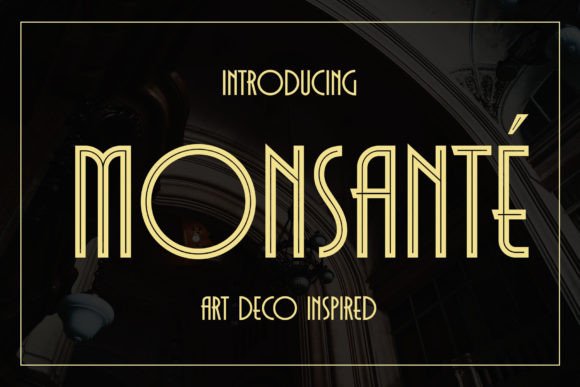
One of the most compelling aspects of adopting Monsante for your project is the versatility offered by its two distinct styles: Regular and Inline. While many font families offer bold and italic variations, the choice between solid and inline forms opens up a different realm of creative possibility. The Regular style provides a strong, commanding presence. It is perfect for situations where legibility and authority are paramount. Think of high-end signage for a boutique hotel or the main headline on a luxury product packaging. The solid strokes command attention without shouting.
Conversely, the Inline style introduces a layer of decorative flair that feels inherently cinematic. By removing the center fill of the characters, the Inline variant creates a sense of lightness and intricacy. This style is exceptionally effective for overlaying on textured backgrounds or photography, as it allows the underlying image to peek through the letterforms. It evokes the feeling of neon signs in old theaters or the engraved text on premium stationery. Designers often find themselves mixing these two styles within a single layout to create hierarchy and visual interest, using the Regular for primary information and the Inline for secondary accents or decorative subheaders.
Where Geometry Meets Luxury
The core DNA of Monsante lies in its geometric construction. Unlike humanist sans-serifs that mimic the stroke of a pen, or serifs that draw from classical inscription, Monsante is built on circles, triangles, and straight lines. This adherence to geometry is what gives it that quintessential 1920s look. However, what sets it apart from free, generic Art Deco fonts available online is the careful crafting of these shapes. The curves are smooth, the angles are sharp where they need to be, and the spacing (kerning) has been meticulously adjusted to ensure that the letters sit comfortably next to one another.
This attention to detail results in a typeface that feels expensive. In the world of branding, perception is reality. If a logo looks hastily assembled, the brand feels cheap. If it utilizes a font like Monsante, the brand instantly inherits an air of exclusivity. This is why the font is particularly well-suited for industries centered around lifestyle and aspiration. From jewelry brands to high-end real estate developments, the typography acts as a silent ambassador of quality. The crisp letterforms ensure that even at smaller sizes, such as on a business card or a menu, the text remains readable and refined.
Practical Applications Across Industries
The utility of Monsante extends far beyond simple aesthetics. Its design makes it a workhorse for a variety of specific applications where tone matters. Consider the wedding industry, where couples are increasingly seeking themes that break away from the traditional cursive script. A wedding suite featuring Monsante can establish a "Great Gatsby" theme or simply add a touch of modern glamor to a minimalist ceremony. The font works beautifully on save-the-dates, ceremony programs, and table numbers, providing a cohesive look that feels curated rather than templated.
In the realm of publishing and media, Monsante shines as a display font for book covers and film titles. Imagine a mystery novel set in the interwar period; the cover typography sets the stage before the reader even opens the book. Similarly, for independent filmmakers, using Monsante for opening credits can instantly elevate the production value of a project. It suggests a level of care and artistic intent that resonates with audiences. Even in corporate environments, certificates and awards benefit from the formal yet stylish nature of this typeface, making the recognition feel more prestigious.
Restaurants and hospitality venues also leverage these qualities effectively. A cocktail menu printed with Monsante suggests that the drinks within are crafted with similar precision and artistry. Signage in lobbies or storefronts gains a timeless quality that doesn't feel tied to a fleeting design trend. Because Art Deco has cycled in and out of fashion for decades, using a font rooted in this style ensures that your design won't look outdated in a year or two. It possesses a classic endurance.
Unlocking Creativity with PUA Encoding
For professional designers, the technical specifications of a font are just as important as its visual appeal. Monsante addresses this by being fully PUA (Private Use Area) encoded. For those unfamiliar with the term, PUA encoding is a method that allows font developers to map special characters, glyphs, and ligatures to specific keys on your keyboard that would otherwise be unused. This means you don't need complex software or code to access the font's full potential.
This feature is a game-changer for workflow efficiency. Instead of hunting through endless character maps or copying and pasting symbols from a website, you can access unique swashes, alternate characters, and decorative flourishes directly from your design application. You can mix and match these special characters to add distinct characteristics to your designs. Perhaps a specific capital "M" has a more dramatic swoop, or a lowercase "g" offers a unique tail that fits your layout better. These small adjustments allow for a custom-typography feel without the cost of hiring a lettering artist. It empowers the designer to tweak the personality of the text to fit the exact mood of the project.
Integrating Monsante into Modern Workflows
Adopting a new font family often raises questions about compatibility and ease of use. Fortunately, Monsante is designed to integrate seamlessly into modern creative ecosystems. Whether you are working in Adobe Illustrator, Photoshop, InDesign, or even word processors like Microsoft Word and Google Docs (with installation), the font behaves predictably. The clear distinction between the Regular and Inline styles makes it easy to build robust type scales. You aren't forced to hunt for a second font to create contrast; everything you need is contained within this single family.
Furthermore, the rise of social media has created a demand for visuals that stop the scroll. Static images and video thumbnails require typography that reads clearly on small screens while still conveying brand identity. The high contrast and geometric clarity of Monsante make it excellent for digital graphics. An Instagram post announcing a sale or a YouTube thumbnail for a history documentary can gain immediate credibility through the use of this typeface. It cuts through the noise of standard sans-serif fonts that dominate the digital landscape.
When considering a font purchase, designers often weigh the balance between novelty and longevity. Trendy fonts come and go, often looking dated within months. Monsante, however, draws from a historical well that has proven resilient. By choosing a typeface inspired by the 1920s but executed with modern standards, you are investing in a tool that will remain relevant. It serves both the purpose of immediate aesthetic impact and long-term brand stability.
Ultimately, the decision to use Monsante comes down to the story you want your design to tell. If that story involves elegance, a touch of rebellion, geometric perfection, and a nod to the golden age of design, then this font is an ideal partner. It invites you to experiment with its inline variations, play with its PUA-encoded glyphs, and craft visuals that resonate with a sense of luxury. In a world saturated with generic typography, Monsante offers a chance to stand out with class and intention.