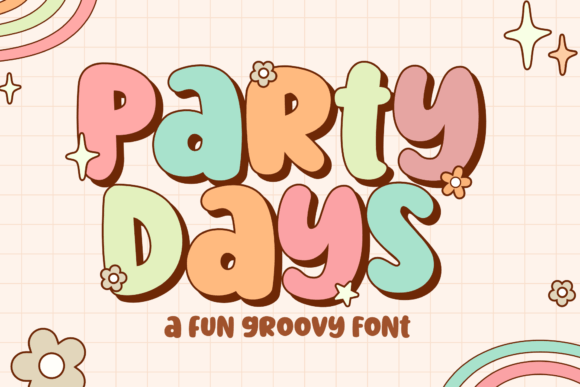
Integrating Party Days: A Practical Guide to Retro Typography in Modern Workflows
In the landscape of visual communication, typography often serves as the silent ambassador for a brand or project. While clean sans-serifs dominate corporate interfaces and elegant serifs anchor editorial layouts, there remains a persistent need for typefaces that inject energy, nostalgia, and personality into a design system. Party Days fills this specific niche. As a fun, groovy font inspired by retro bold typography, it offers more than just aesthetic appeal; it provides a functional tool for designers, marketers, and entrepreneurs looking to break through visual noise. Understanding how to integrate Party Days into a broader creative workflow requires moving beyond simple selection and focusing on strategic implementation, compatibility, and consistency.
Defining the Role of Retro Bold Typography in Project Planning
Before opening a design file or purchasing a license, it is essential to determine where a display font like Party Days fits within the project lifecycle. This typeface is not intended for body copy or long-form reading; its heavy weight and distinctive character shapes make it ideal for headlines, logos, and short bursts of text. In the planning phase of a campaign, product launch, or branding initiative, identifying the "accent" elements is crucial. These are the touchpoints where you need to grab attention immediately.
For professionals managing multiple projects, the decision to use Party Days should align with the emotional tone of the deliverable. If the goal is to evoke feelings of joy, celebration, or a carefree retro vibe, this font becomes a primary asset. However, if the project demands strict corporate neutrality, it may serve better as a secondary element used sparingly in internal morale materials or event-specific graphics. By categorizing fonts based on their psychological impact during the initial briefing stage, teams can avoid the common pitfall of forcing a stylistic mismatch later in the production process.
Strategic Applications Across Different Media
The versatility of Party Days allows it to function effectively across various mediums, but each application requires a slightly different approach to ensure legibility and impact.
- Book Covers and Publishing: In the publishing industry, the cover is the primary sales tool. Party Days works exceptionally well for genres such as humor, lifestyle, cookbooks, or fiction set in the 1970s. When designing a cover, pair this font with high-contrast imagery. The bold strokes of the letters hold up well even when scaled down to thumbnail sizes on digital storefronts, ensuring the title remains readable on mobile devices.
- Packaging and Merchandise: For physical products, texture and material matter. When applying Party Days to packaging, consider how the ink will sit on the substrate. The thick lines of retro bold typography translate beautifully to screen printing on t-shirts, embossing on boxes, or vinyl cutting for stickers. It adds a tactile quality that suggests fun and approachability, making it a strong choice for limited-edition merchandise or seasonal product lines.
- Logotypes and Brand Identity: Creating a logotype with Party Days can instantly establish a brand's personality as playful and unconventional. However, scalability is key. Ensure that the intricate curves and connections in the glyphs do not disappear when the logo is resized for social media avatars or favicon usage. It is often wise to create a simplified wordmark version alongside the full typographic logo for smaller applications.
- Posters and Event Marketing: This is perhaps the most natural habitat for groovy typography. Posters rely on hierarchy, and Party Days naturally commands the top spot. Use it to announce the event name or the headlining act, then support it with a neutral sans-serif for the details like date, time, and location. This contrast ensures the viewer gets the "vibe" first and the information second.
Workflow Integration and Asset Management
Incorporating a new font into an existing workflow involves more than just installation; it requires organization and version control. For freelancers and agencies managing numerous client assets, maintaining a structured font library is vital. When you acquire Party Days, immediately categorize it within your design system under tags like "Display," "Retro," or "Accent." This practice speeds up the retrieval process during high-pressure deadlines.
Compatibility is another critical factor. Before committing to Party Days for a large-scale print run or a web-based campaign, verify the file formats available. Most professional font packages include OTF (OpenType) and TTF (TrueType) versions, which offer broad compatibility with industry-standard software like Adobe Illustrator, Photoshop, and InDesign. If the project involves web delivery, check for WOFF or WOFF2 files to ensure fast loading times and crisp rendering across different browsers. Testing the font in the actual environment where it will be deployed prevents costly revisions later.
Pairing and Hierarchy Strategies
A common mistake in using bold, decorative fonts is overusing them. To maintain professionalism and readability, Party Days should rarely stand alone. Effective design relies on contrast. Pair this groovy display font with a clean, geometric sans-serif or a classic humanist serif for body text. This combination creates a visual rhythm that guides the eye without overwhelming the viewer.
Consider the following pairing logic for your next project:
- Headline: Use Party Days in all caps or title case to maximize the impact of the bold strokes.
- Subheadline: Switch to a medium-weight sans-serif to bridge the gap between the loud headline and the detailed body copy.
- Body Text: Utilize a highly legible serif or sans-serif with generous line height to ensure comfortable reading.
This hierarchical approach ensures that the playful nature of Party Days enhances the message rather than obscuring it. It allows the font to act as an accent, drawing attention to key value propositions while the supporting text handles the heavy lifting of information delivery.
Quality Control and Long-Term Usability
Maintaining consistency across different platforms is a challenge when using distinctive typography. What looks vibrant on a retina display might appear muddy in a low-resolution email newsletter. Implement a quality control step in your workflow specifically for typography. Review proofs at 100% zoom and printed at actual size. Check for kerning issues, which can occasionally occur with retro fonts due to their unique letter shapes. Adjusting the tracking manually may be necessary to achieve perfect optical balance, especially when setting text in all caps.
Furthermore, consider the longevity of the design trend. While retro aesthetics have shown remarkable staying power, relying solely on a trend can date a brand quickly. To mitigate this, use Party Days for campaign-specific materials rather than core brand infrastructure, unless the brand identity is explicitly built around this nostalgic era. This strategy allows you to leverage the font's popularity without locking the business into a style that may eventually feel outdated.
Final Thoughts on Implementation
Successfully integrating Party Days into your professional toolkit comes down to intentionality. It is a powerful resource for adding character to book covers, posters, packaging, and logotypes, but its effectiveness depends on how well it is managed within the larger design ecosystem. By treating typography as a strategic component of the planning process—considering pairing, medium, and scalability—you transform a simple font purchase into a valuable asset that drives engagement. Whether you are a small business owner launching a new product line or a marketer crafting a holiday campaign, the right application of this groovy typeface can elevate the perceived value of your work and resonate deeply with your audience.