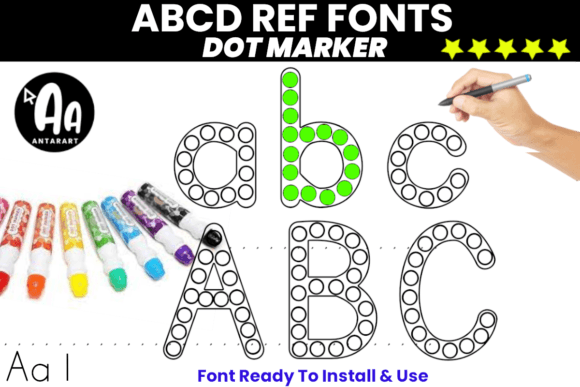
Abc Dot Marker: Creative Ways to Teach and Design
Imagine a tool that bridges the gap between rigid educational standards and fluid creative expression. For educators, parents, and designers alike, finding resources that are both pedagogically sound and visually engaging is often a challenge. This is where Abc Dot Marker steps in as a transformative resource. Based on the renowned D'Nealian Method used in US schools, this dotted display font does more than just provide letters; it offers a structured yet playful framework for creating thousands of unique worksheets. Whether you are a teacher looking to refresh your classroom materials or a designer seeking a nostalgic aesthetic for a new project, understanding the versatility of this tool can unlock a world of practical applications.
The core appeal of Abc Dot Marker lies in its foundation. The D'Nealian Method was developed to ease the transition from printing to cursive writing, focusing on continuous strokes and specific letter formations. By digitizing this approach into a dotted font, the tool allows users to generate custom learning aids instantly. Instead of relying on static, one-size-fits-all workbooks found in big-box stores, you can tailor every page to the specific needs of a learner. This level of customization is invaluable for tutors working with students who have different learning paces or for homeschooling parents who want to integrate specific themes into their literacy lessons.
Reimagining Educational Resources
For educators and parents, the primary use case is obvious: handwriting practice. However, the potential goes far beyond simple tracing. Because the font generates clear, consistent guides, it becomes an excellent medium for developing fine motor skills in young children. The act of connecting dots requires focus and hand-eye coordination, turning a mundane task into an interactive game.
Consider creating themed worksheet packs that align with current events or seasons. If you are teaching the letter "A" during autumn, you can pair the dotted alphabet with leaf illustrations, asking students to trace the letter before drawing their own acorns. This contextual learning helps retention. Furthermore, the font's clarity makes it ideal for creating sensory activities. You can print the dotted letters on cardstock and have students cover the dots with playdough snakes, beads, or even glue and glitter. These tactile variations keep the learning process fresh and accommodate different sensory preferences.
- Differentiated Instruction: Adjust the size of the font to suit various developmental stages, from large motor movements for toddlers to precise tracing for kindergarteners.
- Cross-Curricular Integration: Combine the alphabet practice with science or history topics by adding relevant vocabulary words in the same dotted style.
- Assessment Tools: Create quick, custom quizzes where students must identify and trace specific letters within a word list.
Design Applications Beyond the Classroom
While education is the natural home for Abc Dot Marker, its utility extends significantly into the realms of graphic design, marketing, and content creation. Designers often seek typography that evokes nostalgia, innocence, or a hands-on feel. The dotted aesthetic immediately recalls childhood school days, making it a powerful choice for brands targeting families, children's products, or retro-themed campaigns.
Freelancers and small business owners can leverage this font to create unique branding elements. Imagine a bakery specializing in kids' birthday cakes using a dotted font for their logo or menu headers to suggest fun and customization. Bloggers and social media managers can use the style to create eye-catching graphics for posts about parenting hacks, DIY crafts, or back-to-school tips. The visual language of "connect-the-dots" implies interaction, inviting the viewer to engage with the content rather than just passively consume it.
When adapting this font for professional design work, consistency is key. Use the dotted style for headlines or accent text, but pair it with a clean, solid sans-serif font for body copy to ensure readability. Overusing the dotted effect can make a design feel cluttered or difficult to read for adults. The goal is to use the font as a stylistic highlight that draws attention to key messages without sacrificing legibility.
Practical Project Ideas for Creators
To truly harness the power of this resource, consider these specific project ideas that blend functionality with creativity:
- Interactive Event Invitations: Design party invitations for children's events where the guest's name or the event details are presented in the dotted font. Include a small crayon with the invite and encourage guests to trace the details before arriving. This sets a playful tone immediately.
- Custom Sticker Sheets: Generate sheets of dotted letters and numbers, print them on adhesive paper, and cut them out. These can be sold as educational tools or used as decorative elements for planners and journals.
- Digital Planners and Tablets: With the rise of digital note-taking on iPads and tablets, create downloadable PDFs optimized for stylus use. Users can trace the letters directly on their screens, offering an eco-friendly alternative to paper worksheets.
- Merchandise for Makers: Crafters can use the designs to create iron-on transfers for t-shirts or stencils for wood burning projects, appealing to the "maker" community who value handmade, personalized items.
Maintaining Quality and Clarity
Regardless of whether you are creating a worksheet for a first-grader or a marketing flyer for a startup, the effectiveness of Abc Dot Marker depends on execution. The D'Nealian Method relies on specific stroke orders and flows. When generating your content, ensure that the spacing between dots is appropriate for the intended medium. If the dots are too far apart, the guide loses its value for handwriting practice; if they are too close, it may look like a dashed line rather than a constructive guide.
Organization is also crucial when producing large volumes of content. If you are a publisher or an educator creating a curriculum, develop a naming convention for your files. Categorize them by letter, skill level, or theme. This not only saves time but ensures that you can easily update or modify materials as needed. Consistency in your output builds trust with your audience. Parents and teachers will return to your resources if they know the quality and style remain reliable.
Furthermore, always test your creations. Print a sample page to check ink coverage and line weight. What looks perfect on a high-resolution monitor might appear faint or pixelated on a standard home printer. Ensuring that the final physical product is crisp and clear demonstrates professionalism and respect for the end-user's experience.
Embracing Versatility in a Digital Age
In an era dominated by screens, the tactile nature of connecting dots offers a grounding counterbalance. Abc Dot Marker serves as a reminder that sometimes the most effective tools are those that slow us down and require active participation. For the modern creator, this font is not just a typeface; it is a methodology for engagement. It invites users to complete the picture, to fill in the gaps, and to take ownership of the learning or design process.
By integrating this resource into your workflow, you are choosing to prioritize clarity, interactivity, and human connection. Whether you are helping a child master their ABCs or designing a brand identity that speaks to the inner child in all of us, the possibilities are as endless as the combinations of letters themselves. The key is to approach each project with intention, using the structure provided by the D'Nealian-based dots as a launchpad for your own unique creative vision.